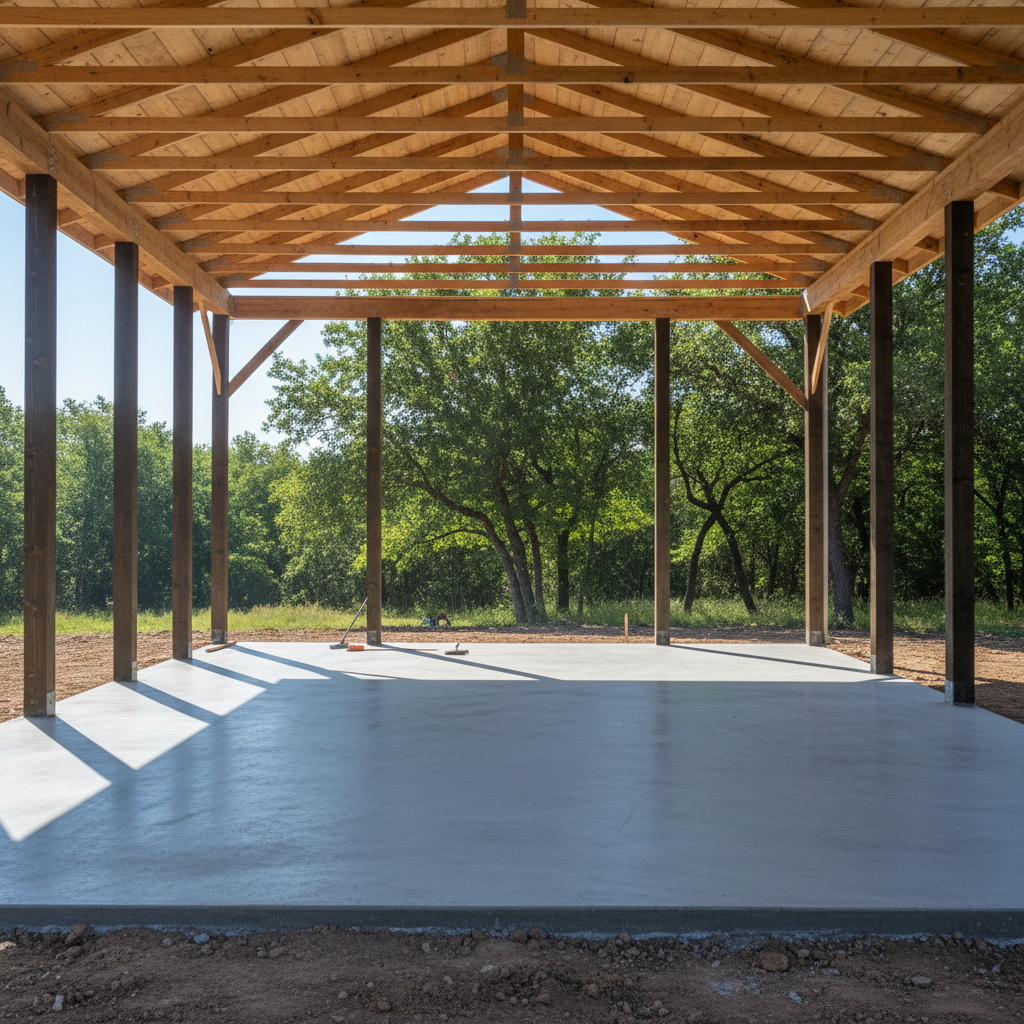
A concrete floor is not just a slab. It is an important part of your property. This is true whether it is in your pole barn, your garage, or your home. Our concrete here in Dallas takes a beating. It goes through scorching summers as well as unexpected cold snaps. In addition, our expansive clay soils are infamous. Your concrete needs some care to last. We will talk about how to keep it in top shape.
Extend the Life of Your Concrete Floor
You want your concrete to last. We know this is important. It is all about taking care of it before problems start. This is especially true in Dallas where the ground moves under our feet. Our clay soils absorb water and they swell. Then they shrink during dry periods. This puts a lot of pressure on concrete slabs. This constant movement can lead to cracks as well as other damage if you are not careful.
- Proper Drainage is Key: You must make sure water drains away from your concrete. If water pools around the edges, it will seep into the soil underneath. This will make that expansive clay soil do its thing even more. Good gutters can make a huge difference. Proper grading can also help. Sometimes French drains are needed as well.
- Seal it Up: This is probably the most important thing you can do for your concrete. A good quality sealant protects your concrete from moisture as well as chemicals as well as UV rays. In our Dallas climate, you are looking at resealing every 2 to 5 years. This depends on traffic and the type of sealant. Applying sealer in the middle of a Dallas summer afternoon when the slab is very hot can cause bubbling and adhesion problems. Aim for cooler morning hours. Apply it after the dew has evaporated but before the sun turns your slab into a griddle.
- Mind Your Joints: Those lines in your concrete are not just for looks. They are expansion joints. They allow the concrete to expand and contract with temperature changes. This helps prevent cracking. You must make sure these joints are properly filled with a flexible material. If the filler degrades, water can get in. This can erode the soil underneath. It can also cause sinking or heaving.
Regular Maintenance: What It Looks Like
Keeping your concrete clean and dry is half the battle. This is especially true here in North Texas. Dust, sand, and pollen are always trying to settle on surfaces.
- Sweep Regularly: Dust, sand, and grit act like sandpaper. A quick sweep once or twice a week keeps abrasive debris from wearing down your concrete surface.
- Clean Spills Promptly: Oil, chemicals, or anything else that spills should be cleaned up right away. Even if your concrete is sealed, letting spills sit can lead to stains as well as damage. Use a mild cleaner. Rinse the area thoroughly.
- Pressure Wash (Carefully): A pressure washer can be good for tougher dirt. You must use it on a low setting. You do not want to chip away at the surface. You also do not want to blast out joint fillers.
- Check for Moisture: Dallas's humidity can be a real problem. High humidity can increase the pH levels in concrete. This compromises its integrity as well as any coatings you might have. It also creates good conditions for mold and mildew. If you have an indoor concrete floor, you must make sure you have good ventilation. You also need to address any sources of moisture.
Warning Signs of Problems
You do not want to wait until a small issue becomes a big problem. Keep an eye out for these red flags.
- Cracks: Hairline cracks are common. If you see cracks that are wider than 1/8 inch, that is a sign of trouble. Cracks that are deep or spreading are also problems. If one side is higher than the other, that is also a bad sign. Cracks near corners of doors and windows can point to foundation movement. Zig-zagging cracks through brick can also indicate foundation movement.
- Uneven or Sinking Slabs: If your floor is not level, that means the soil underneath is shifting or settling. If you see dips and depressions, this is also the case. This can create tripping hazards as well as drainage issues.
- Spalling or Flaking: This is when the concrete surface starts to break off in chunks. It can be caused by freeze-thaw cycles. Yes, even in Dallas, we get those. Poor installation can also cause it. Moisture issues are another cause. If you see rebar exposed, that is a serious structural concern for your Dallas Pole Barn Solutions concrete.
- Rust Stains: If you see rust stains on your concrete, it could mean the rebar inside is corroding. This is especially true around cracks. This is a big deal because corroding steel expands. This can crack the concrete from the inside out.
- Water Pooling: If water collects in low spots after rain, it means your concrete has settled. This will lead to more erosion as well as weakening of the support structure.
When to Call a Professional
Some things are just beyond a DIY fix. If you see any of the serious warning signs we just mentioned, it is time to bring in the pros. If you are unsure, you should also call a professional. Early intervention can save you a lot of money in the long run.
- Significant Cracks: If cracks are wide, you need an expert. If they are actively spreading, an expert must assess the structural integrity. If there is an offset where one side is higher, you also need an expert.
- Unevenness or Settlement: If your floor is noticeably unlevel, that is a foundation issue. If you have doors and windows sticking, that also needs professional attention.
- Water Intrusion: Persistent moisture problems need to be addressed. This is especially true if it is coming up from underneath the slab. Someone who understands concrete and Dallas's specific soil and humidity challenges should handle this.
- Spalling with Exposed Rebar: This indicates a potential structural problem. It needs immediate attention from a concrete repair specialist.
At Dallas Pole Barn Solutions, we have seen all kinds of concrete problems. We know what our local climate and expansive soils can do to concrete in Dallas. Do not let a small problem turn into a massive repair bill. A little vigilance and timely action can keep your concrete floors solid for many decades.